What Does a Frog Have to Do with Horses? Understanding Horse Hoof Anatomy
What Does a Frog Have to Do with Horses? Understanding Horse Hoof Anatomy
What does a frog have to do with horses? If you're new to horseback riding lessons in the greater Albuquerque area, you might be surprised to learn that every horse has a "frog"—and it has nothing to do with the amphibian. The frog is a vital, V-shaped structure on the bottom of a horse's hoof that plays a crucial role in circulation, shock absorption, and overall hoof health. Understanding this unique part of horse anatomy is an essential piece of horsemanship knowledge that every rider should learn.
What Is the Frog on a Horse's Hoof?
The frog is a triangular, rubber-like pad located on the underside of a horse's hoof, nestled between the heel bulbs. It's soft, slightly spongy to the touch, and typically darker than the surrounding hoof material. The frog acts as a natural shock absorber when the horse walks, trots, or runs, cushioning impact and protecting the bones and joints above it.
Why Is It Called a Frog?
The name likely comes from the structure's resemblance to a crouching frog when viewed from below. Its V-shape, with the point facing forward toward the toe, has a similar outline to the amphibian. While the exact origin of the term is debated, it's been used in equestrian circles for centuries and remains the standard anatomical term today.
The Frog's Important Functions
The frog serves several critical purposes in a horse's hoof health. First, it aids in circulation by pumping blood back up the leg with each step—a mechanism often called the "heart of the hoof." Second, it provides traction and grip, especially on uneven or slippery terrain. Third, it absorbs shock and distributes weight evenly across the hoof, reducing strain on tendons and ligaments. A healthy frog is essential for a healthy horse.
What Does a Healthy Frog Look Like?
A healthy frog should be firm yet slightly pliable, without cracks, splits, or foul odor. It should have a consistent texture and color, typically a darker gray or black. During beginner horsemanship lessons at Bosque Equine Connections, students learn to recognize signs of a healthy versus unhealthy frog as part of basic hoof care and grooming routines.
Common Frog Problems: Thrush and More
One of the most common issues affecting the frog is thrush, a bacterial or fungal infection that causes a black, foul-smelling discharge and deterioration of the frog tissue. Thrush develops in moist, dirty conditions and can be painful for the horse if left untreated. Regular hoof cleaning and proper stable hygiene are key to prevention. Learning to identify and address these issues is an important part of horse care education.
Why Learning About the Frog Matters for Riders
Understanding the frog and overall hoof anatomy helps riders appreciate the importance of regular hoof care, proper shoeing or trimming schedules, and daily hoof cleaning. It also deepens your connection with the horse and reinforces the responsibility that comes with horsemanship. In horseback riding lessons that include hands-on care, students gain practical knowledge that makes them more confident and capable riders.
Hoof Care as Part of Horsemanship
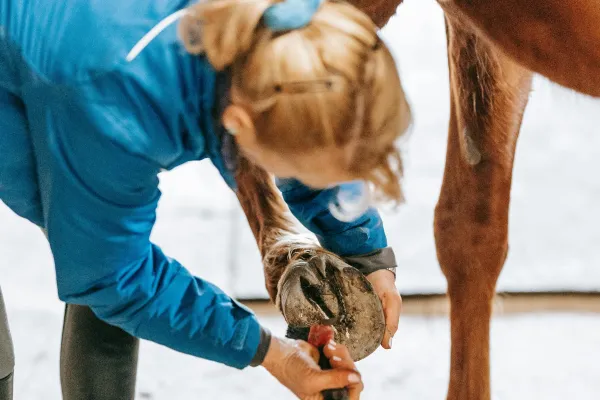
At Bosque Equine Connections in Corrales, beginner horse lessons include weekly unmounted horsemanship sessions where students learn essential skills like hoof picking and inspection. You'll learn how to safely lift a horse's hoof, clean out debris, and check the frog for signs of health or problems. These foundational skills are just as important as riding itself.
Beginner Horse Lessons in Corrales
At Bosque Equine Connections, we believe that true horsemanship means understanding the whole horse—not just how to ride. Our beginner-friendly program includes hands-on learning about horse anatomy, grooming, tacking, and hoof care, so you build a complete foundation of knowledge and skills.
For riders ready to deepen their involvement, our Bosque Equine Scholars program offers structured opportunities to engage in feeding, stall cleaning, tack upkeep, and daily horse care. This immersive experience helps you become a knowledgeable, confident horseperson who truly understands and respects these amazing animals.
Book Your First Horseback Riding Lesson Near Albuquerque
Ready to learn more about horses—from their hooves to their behavior? Book your Introductory Lesson at Bosque Equine Connections in Corrales today and discover the rewarding experience of horseback riding lessons that teach both riding and horsemanship. Whether you're curious about horse anatomy or simply want to try something new, we're here to guide you every step of the way.